

Alarm panel keypads, tones, and the FCC label
The alarm maker's manual explains the keypad and its tones. The FCC rules cover the label.
Disclosure: We may earn a commission if you buy through links on this page. It does not change our guidance. Affiliate Disclosure
What makers call them
Makers and retailers call these alarm keypads, alarm panel keypads, or security system keypads. The maker's manual says what each button and tone means.
Beeping and tones
We do not explain any maker's tones or codes. Read the maker's manual, or ask the maker or your monitoring service.
A keypad wired to the panel
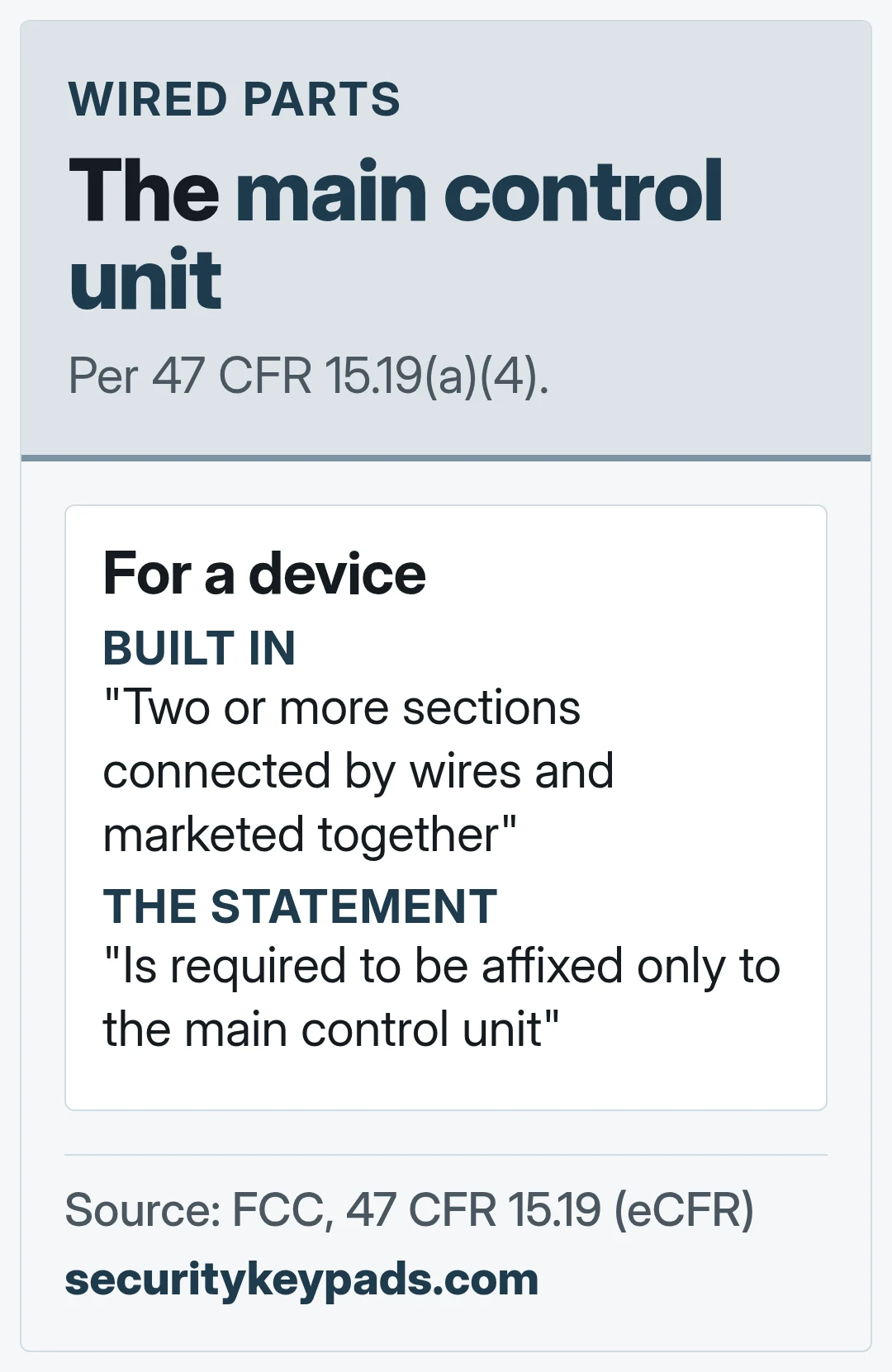
Where a device is "constructed in two or more sections connected by wires and marketed together," the FCC rule at 47 CFR 15.19 says the statement "is required to be affixed only to the main control unit." We do not say whether a given alarm system is built and marketed that way; its label and manual show where it carries the statement.
What an alarm cannot promise
No keypad, lock, or code can guarantee that a door will stay secure or that a break-in will not happen. In an emergency, call 911.
This is general information, not legal or security advice.
FAQ
General information only. No keypad, lock, or code can guarantee that a door will stay secure or that a break-in will not happen. Keep codes private, change any code you have shared, and follow the maker's instructions. Before you put a keypad or lock on a door people use to leave a building, check with your local building or fire official. In an emergency, call 911.



Next: what a keypad is
A code pad, named by makers.
