

What no keypad, lock, or code can promise
We make no security claims. Here is what the words on a box mean, and whose they are.
Disclosure: We may earn a commission if you buy through links on this page. It does not change our guidance. Affiliate Disclosure
No guarantee
No keypad, lock, or code can guarantee that a door will stay secure or that a break-in will not happen.
Whose words they are
When a box or listing calls a keypad secure, tamper resistant, encrypted, or smart, those are the maker's descriptions, not ours. We do not test or rate any product.
The FCC label
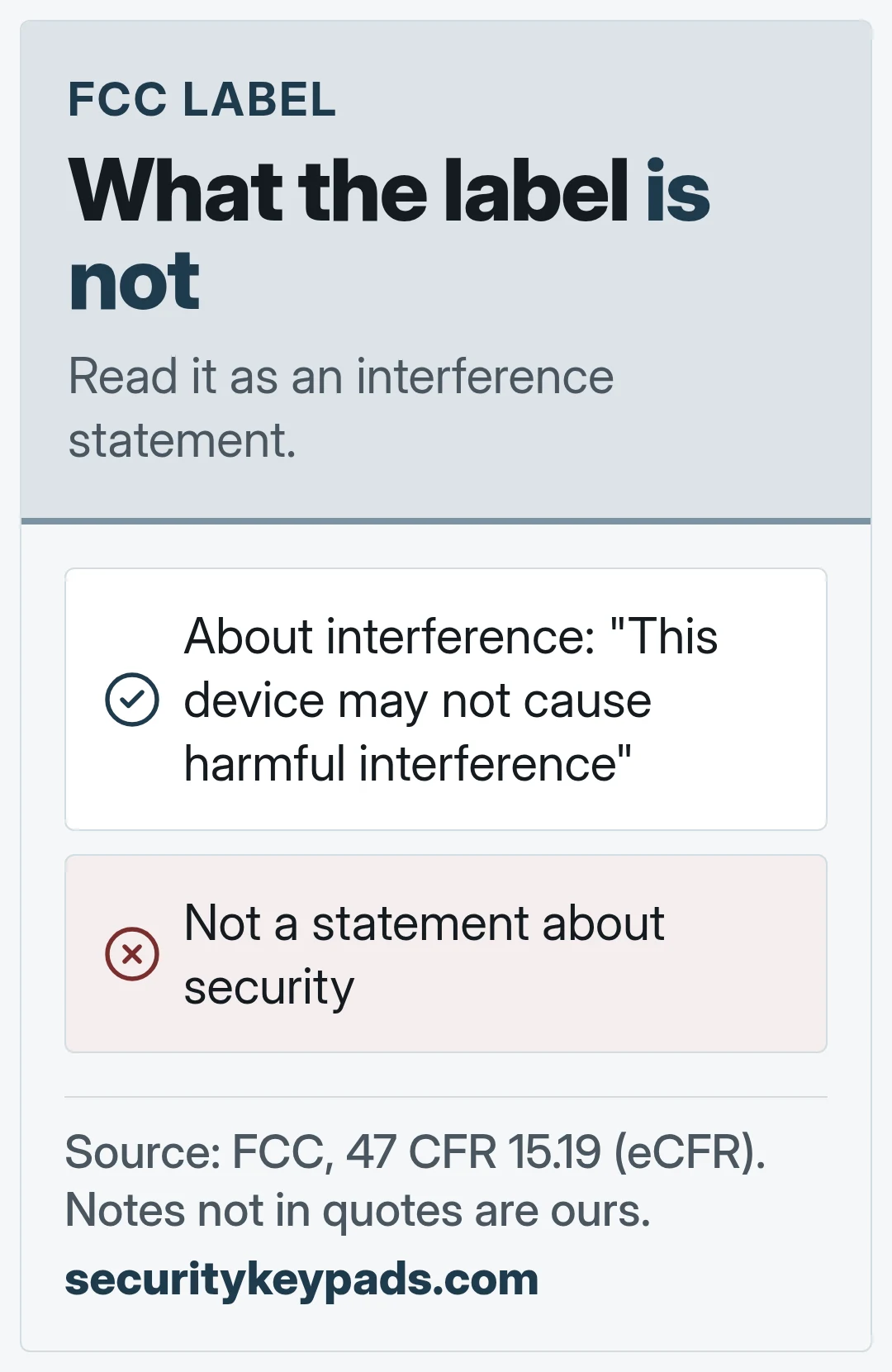
An FCC statement on a device is not a statement about its security. The 47 CFR 15.19 statement is about interference: "This device may not cause harmful interference."
What we do not publish
We publish no hacking, bypass, or vulnerability content, and no crime statistics.
This is general information, not legal or security advice.
FAQ
General information only. No keypad, lock, or code can guarantee that a door will stay secure or that a break-in will not happen. Keep codes private, change any code you have shared, and follow the maker's instructions. Before you put a keypad or lock on a door people use to leave a building, check with your local building or fire official. In an emergency, call 911.



Next: smart keypads
Smart is the maker's word.
