

Interference and the FCC statement on a keypad
The FCC statement sets two conditions. Here is what each one says.
Disclosure: We may earn a commission if you buy through links on this page. It does not change our guidance. Affiliate Disclosure
The first condition
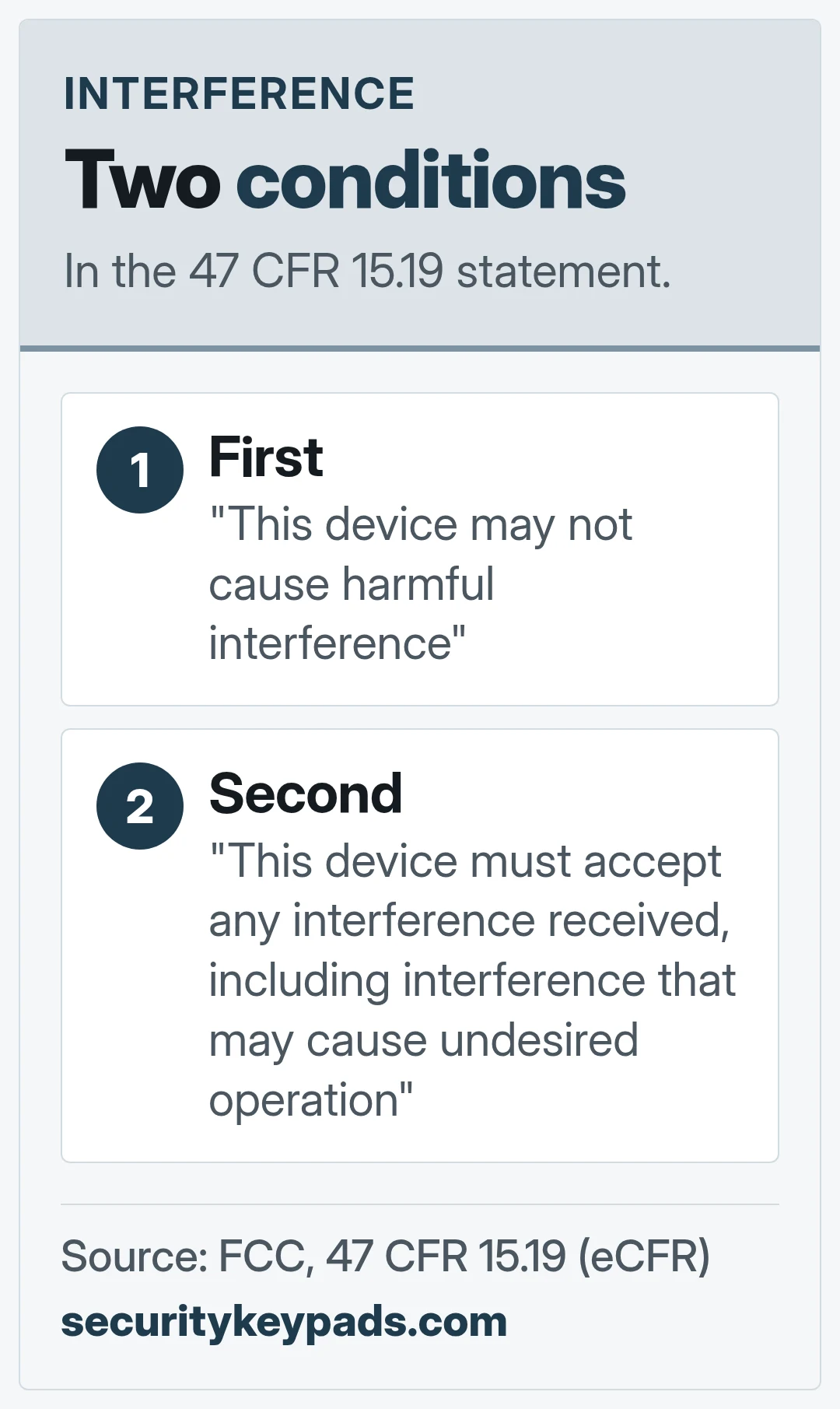
The statement in 47 CFR 15.19 says "(1) This device may not cause harmful interference."
The second condition
It goes on: "(2) this device must accept any interference received, including interference that may cause undesired operation."
Harmful interference
Harmful interference is the FCC's term. We do not define it or say when a device causes it.
Changes to the device
The FCC rule at 47 CFR 15.21 says the manual "shall caution the user that changes or modifications not expressly approved by the party responsible for compliance could void the user's authority to operate the equipment."
If your keypad stops working
We give no repair steps. Follow the maker's instructions.
This is general information, not legal or security advice.
Sources: eCFR, 47 CFR 15.19, Labeling requirements; eCFR, 47 CFR 15.21, Information to user.
FAQ
General information only. No keypad, lock, or code can guarantee that a door will stay secure or that a break-in will not happen. Keep codes private, change any code you have shared, and follow the maker's instructions. Before you put a keypad or lock on a door people use to leave a building, check with your local building or fire official. In an emergency, call 911.



Next: Part 15 statements
Three statements, one rule.
